The Ultimate Guide to Hardscaping in Glendale, CA: Landscape Maintenance Tips for Low-Water Yards
Hardscaping carries more weight in Glendale than it does in wetter climates. A patio is not just a patio here. A gravel path, a permeable sitting area, a band of decorative rock near the curb, or a small courtyard framed with drought tolerant landscaping can lower water demand, reduce weekly upkeep, and help a yard make sense through hot summers and mild winters.
Glendale’s own water-saving guidance points homeowners toward California-friendly and native California plants because they fit the local climate, reduce outdoor watering, and can lower maintenance needs. That guidance matters because much of the city’s potable water is used outdoors for landscaping. When a yard relies too heavily on thirsty turf, overspray, and planting that does not suit the site, the water bill tells the story. So does the weekend schedule.

Good hardscaping is not about paving everything over. In Glendale, the better approach is balance. Use stone, gravel, decomposed granite, pavers, steps, walls, and seating areas to organize the yard, then plant intelligently around those features. The result can feel clean, usable, and alive without demanding constant irrigation or lawn care.
What hardscaping should accomplish in a Glendale yard
A low-water yard still needs structure. In fact, it often needs more structure than a traditional lawn because there is no broad green carpet to visually tie everything together. Hardscaping gives the landscape its bones.
In front yard landscaping, hardscape typically handles the first impression. A walkway should feel intentional from the sidewalk or driveway to the entry. A strip of gravel landscaping can make a narrow side yard look finished instead of forgotten. Decorative rock can frame planting beds, but it needs to be used with restraint so the yard does not look like a parking lot. In backyard landscaping, hardscape often does the practical work: creating dining space, organizing circulation, stabilizing slopes, reducing muddy areas, and making room for outdoor living without expanding irrigation.
The biggest mistake I see in landscape renovation projects is treating hardscape as a cosmetic upgrade instead of landscaping near me a planning tool. A homeowner removes turf, spreads gravel, adds a few plants, and expects the yard to feel complete. Sometimes it does for a month. Then weeds appear, irrigation does not match the new planting, the gravel migrates onto the sidewalk, and the space feels hotter and flatter than expected. Proper landscape planning prevents that. The hardscape should guide movement, manage water, protect soil, and leave enough planting area for shade, texture, habitat, and seasonal interest.
Glendale’s guidance for single-family areas also emphasizes reducing paved areas and maximizing water permeability. That is an important distinction. Low maintenance landscaping does not mean sealing the property under concrete. A hardscape-heavy yard can still respect water movement by using permeable surfaces where appropriate, breaking up paved areas with planting, and avoiding unnecessary runoff.
Start with the site, not the material catalog
The most successful water wise landscaping begins with observation. Before choosing pavers, gravel color, artificial turf, or plants, spend time reading the yard.
Where does the sun hit hardest in July? Which areas stay shaded by the house? Where does water currently run during rain? Where do you actually walk, and where do delivery drivers, children, guests, or pets cut across the yard? Which windows look out onto the landscape every day? A yard that looks good from the street but feels awkward from the kitchen window is not finished design. It is staging.
Glendale’s mild winters and hot summers reward landscapes that are honest about exposure. A sunny parkway, a south-facing front slope, and a protected courtyard near the house should not receive the same plant selection or irrigation schedule. Hardscaping helps divide those zones. A gravel path can separate a low-water planting bed from a seating area. A small patio can replace a thirsty patch of lawn that was only being used as visual filler. A stepping-stone route can prevent foot traffic from compacting soil around young plants.
Small yard landscaping especially benefits from this kind of precision. In a compact Glendale lot, every square foot has to earn its keep. A single oversized patio can make the yard feel barren, while too many tiny planting pockets can make maintenance fussy. The sweet spot often comes from one clear hardscape gesture, such as a compact seating pad or direct entry walk, softened by drought tolerant planting at the edges.
Turf removal and the role of hardscape
Glendale promotes replacing turf with water-efficient plants, and for good reason. Turf needs weekly care, and in a low-water landscape it is often the largest source of unnecessary irrigation. The city’s materials also note that native plants can survive drought with about 20 gallons of water per month, a striking contrast to the expectations many homeowners have from conventional lawns.
That does not mean every lawn must disappear, or that every replacement should be gravel. The better question is what the turf is doing. If it is a play surface that is used daily, there may be a case for keeping a smaller, carefully irrigated area or considering synthetic grass. If it is an ornamental strip no one uses, it is usually a strong candidate for landscape renovation.
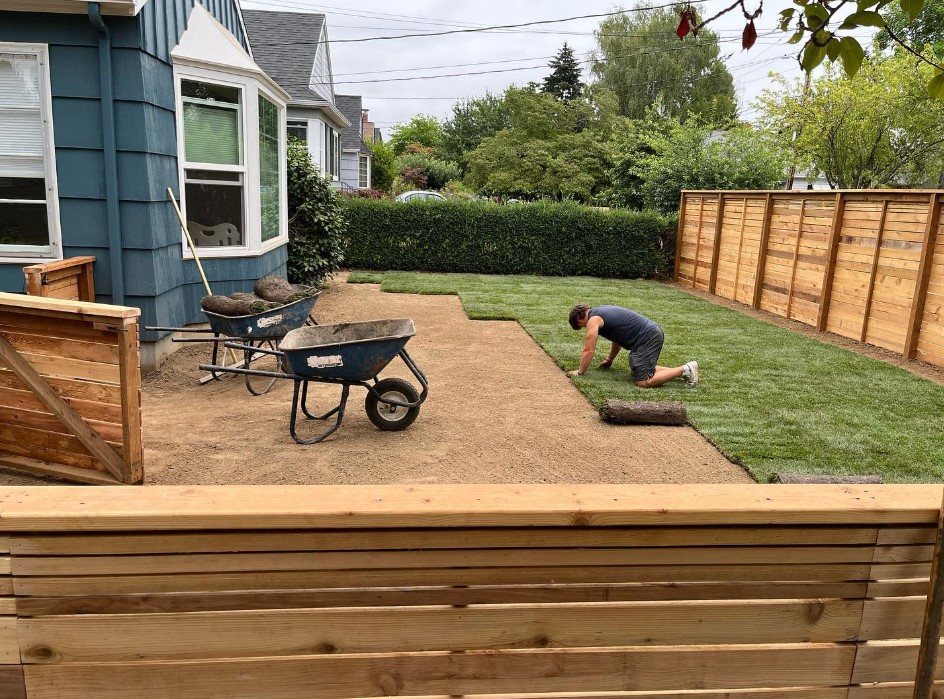
Sod installation still has a place in some projects, but it should be deliberate rather than automatic. A small functional lawn may make sense for a family that uses it, provided the irrigation system is efficient and the owner accepts the ongoing lawn care. Artificial turf can reduce watering, but it is not maintenance-free. It still needs cleaning, edging control, and thoughtful placement. It also does not provide the same ecological benefits as living plants. In Glendale, where city guidance encourages water-efficient plants and permeability, synthetic grass should be considered as one tool among many, not a universal fix.
Hardscape can replace portions of lawn more gracefully when it is tied to real use. A dining patio outside a kitchen door makes sense. A decomposed granite path to a side gate makes sense. A small gravel court with chairs under filtered shade can make sense. A large expanse of decorative rock where lawn used to be may save water, but if it offers no function and little planting, it can feel sterile.
Permeability matters more than many homeowners realize
A low-water yard still receives rain. Glendale encourages rainwater use through rain barrels, and city landscaping guidance supports site design that maximizes water permeability by reducing paved areas. Those ideas belong in the same conversation.
Hardscape should slow, spread, and absorb water where possible. Gravel, decomposed granite, and properly installed permeable paving can allow more water to move into the ground than a solid slab. Planting beds with mulch help protect soil from drying quickly. Rain barrels can capture roof runoff for use on gardens and trees, adding another layer of conservation.
This does not mean every surface should be loose gravel. Driveways, steps, and high-traffic areas need stability and safety. But even then, the layout can avoid overbuilding. A front walk does not need to become a sea of concrete. A backyard patio can be sized for the furniture and circulation it actually needs, with planting beds and permeable zones around it.
When hardscape is overdone, the yard loses resilience. Water runs off faster. Planting areas shrink. Heat can build around the house. Maintenance shifts from mowing to blowing debris off large paved surfaces and fighting weeds in poorly prepared gravel. The best modern landscaping in Glendale often looks simple, but the simplicity comes from careful proportion.
Materials that work well in low-water Glendale landscapes
Material selection should follow use, slope, drainage, maintenance tolerance, and architectural style. A Spanish-style home, a mid-century house, and a newer modern home may all use water wise landscaping, but the hardscape language should not be identical.
Decorative rock is common because it lasts, suppresses bare-soil dust when installed correctly, and pairs well with drought tolerant landscaping. The key is choosing the right size and using edging where rock meets paving or sidewalk. Small gravel can scatter easily on slopes or near foot traffic. Larger rock stays put better but can be harder to walk on and may look heavy in a small yard. Mixed sizes can look natural, but they require a good eye.
Gravel landscaping can be very effective in side yards, utility areas, and informal paths. It should not be treated as a shortcut over unprepared soil. Without proper soil preparation, weed management, grading, and containment, gravel becomes a maintenance problem. A compacted base may be needed for paths, while planted areas may need soil left open enough for roots and water movement. glendale landscape contractors ridgelineoutdoorliving.com The details differ by use.
Pavers offer cleaner circulation and more stable outdoor living space. They can suit both traditional and modern landscaping, depending on color, joint pattern, and scale. Large-format pavers create a crisp look, especially with gravel or low planting between them, but they need careful installation so they do not rock, settle, or create trip points.
Concrete is durable and practical, but too much of it works against Glendale’s permeability goals. When concrete is appropriate, shape and placement matter. A narrow, direct walkway can be better than a broad poured surface. A patio sized to real furniture dimensions can feel generous without swallowing the yard.
Decomposed granite is popular for low maintenance landscaping, especially in garden paths and informal seating zones. It feels softer than concrete and more finished than raw dirt. It does, however, need proper installation and occasional refreshing. It is not the right surface for every slope or every household, particularly where heavy runoff or constant tracking into the house is a concern.
Pairing hardscape with native California plants
A hardscape-only yard rarely feels complete. Plants bring shade, movement, scent, seasonal change, and ecological value. Glendale specifically encourages California-friendly and native California plants because they suit the city’s mild winters and hot summers while reducing watering, pesticides, and maintenance.
In practice, plant selection should begin with water needs and exposure. Group plants with similar irrigation requirements so the irrigation systems can be efficient. A native or drought-tolerant plant that wants occasional deep watering should not be placed on the same schedule as a plant that needs frequent shallow water. The design may look fine on paper, but the irrigation schedule will eventually favor one plant and stress the other.
Hardscape can help make native planting look intentional. Some homeowners worry that drought tolerant landscaping will look messy or too wild. That usually happens when the planting has no frame. A clean path, a defined gravel edge, a low wall, or a simple patio can give relaxed planting a professional shape. The contrast works beautifully: structured hardscape, natural planting.
Garden design for low-water yards also requires patience. Many drought-tolerant and native plants do not look full on day one, and they should not be crowded just to satisfy opening-week expectations. Overplanting creates future pruning, competition, and irrigation problems. A young landscape may need mulch and temporary openness while plants establish. After a year or two, the spacing usually starts to make sense.
Glendale’s drought-tolerant demonstration garden at the Downtown Central Library is a useful local reference point because it shows water-wise plants and low-water irrigation techniques in a real civic landscape. For homeowners who have only seen turf and hedges, a demonstration garden can help translate the concept into something visible.
Soil preparation is still essential in a hardscape-forward yard
It is easy to underestimate soil when stone and paving dominate the plan. Yet most failures in low-water landscapes begin below the surface. Soil preparation affects drainage, root health, weed pressure, and how well mulch performs.
Before installing planting, compacted soil should be addressed so water can enter rather than sheet across the surface. This matters even more after turf removal because old lawn areas may have compacted layers from foot traffic and maintenance equipment. If new plants are set into tight soil and surrounded by rock, they may struggle even if they are drought tolerant.
Mulching is one of Glendale’s recommended water-saving practices, and it deserves a permanent place in landscape maintenance. Mulch reduces evaporation, moderates soil temperature, and helps suppress weeds. Organic mulch works well in many planting areas because it gradually improves soil as it breaks down. Decorative rock can function as a mineral mulch in the right setting, especially where the design calls for a clean, durable surface. The choice should fit the plants, the exposure, and the desired look.
There is a trade-off. Organic mulch needs replenishment. Rock lasts longer but can be harder to modify later and may not improve soil. Around plants that drop leaves or flowers, rock can also collect debris that is more visible than it would be on bark or wood mulch. A professional landscape design often uses both, placing each where it performs best.
Irrigation systems: the quiet test of good design
A low-water yard can still waste water if the irrigation system is poorly designed or poorly maintained. Glendale’s water-saving tips include checking irrigation systems for leaks, using drip irrigation, adding mulch, watering before 9 a.m. Or after 6 p.m., and watering landscape only one day a week in winter. Those details are not glamorous, but they are the difference between a yard that simply looks drought tolerant and one that actually conserves water.
Drip irrigation is especially useful in water wise landscaping because it delivers water near plant roots rather than spraying pavement, walls, or decorative rock. It also works well with separated planting zones. A front yard with native shrubs, a young tree, and a few accent plants may need different emitter placement than a backyard border or slope.
Leaks deserve regular attention. A small break hidden under mulch can waste water quietly. A clogged emitter can stress one plant while the rest of the zone looks fine. Overspray onto hardscape is another common issue, especially when older spray heads remain after a landscape renovation. If you remove turf but leave lawn-style irrigation behind, you have only completed half the project.
Smart scheduling also matters. Watering before 9 a.m. Or after 6 p.m. Reduces loss during hotter parts of the day. Winter watering should drop significantly, and Glendale’s guidance specifically notes watering landscape only one day a week in winter. A controller that never changes with the season is a maintenance problem disguised as convenience.
A practical maintenance rhythm for low-water hardscapes
Low maintenance landscaping is not no-maintenance landscaping. Hardscape reduces mowing, edging, and frequent watering, but it introduces its own care tasks. The goal is to make those tasks predictable and light.
A good maintenance rhythm catches small issues before they become expensive. Gravel that migrates onto a sidewalk should be swept back and contained before it becomes a safety concern. Mulch should be topped up before bare soil appears. Drip lines should be checked before summer heat exposes weak spots. Plants should be pruned according to their natural form, not sheared into generic shapes that increase stress and ruin the design.
Here is a concise seasonal checklist that fits most low-water Glendale yards:
- Check irrigation systems for leaks, clogged emitters, overspray, and controller settings before the hottest part of the year.
- Refresh mulch where soil is exposed, keeping it useful for moisture retention and weed suppression.
- Remove weeds while they are small, especially in gravel landscaping and along paver joints.
- Sweep decorative rock, paths, and patios as needed so organic debris does not build up.
- Adjust watering seasonally, including reduced winter watering consistent with local guidance.
The most overlooked item is irrigation adjustment. Many homeowners invest heavily in landscape renovation, then leave the controller on an old lawn schedule. The plants may survive, but water savings decline and root systems may not develop as intended.
Front yards: curb appeal without excess watering
Front yard landscaping in Glendale has to satisfy several demands at once. It should look cared for from the street, provide a safe route to the entry, avoid unnecessary water use, and fit the architecture. A lawn can do some of that, but it does so with weekly care and regular irrigation. Hardscape and drought tolerant planting can often do it better.
A strong front yard usually begins with the walkway. If the path from the sidewalk or driveway to the door is awkward, visitors will create their own route. Once that route is visible, the yard starts to look worn no matter how nice the plants are. A direct, comfortable path framed by low-water planting solves both circulation and appearance.
Near the curb, decorative rock and drought-tolerant shrubs can replace narrow turf strips that are difficult to water efficiently. These areas are notorious for overspray because they sit beside sidewalks and driveways. Drip irrigation and mulch, paired with appropriate plant selection, make more sense than spray heads trying to keep a skinny lawn alive.
Plant height matters in the front yard. Low planting near walks and driveways keeps views open. Taller shrubs can frame windows or soften blank walls, but they should not be placed where constant pruning will be required. A low-water landscape that needs monthly shearing is not truly low maintenance.
Backyards: outdoor living with less irrigation
Backyard landscaping gives homeowners more freedom because the design can respond to private use. Some families need a dining patio. Others want a quiet garden, a play zone, a dog-friendly surface, or a low-water retreat viewed from indoors.
Hardscape should match actual habits. If dinner outdoors happens twice a year, a huge dining terrace may not be worth the cost or the loss of planting area. If the family spends every evening outside, a well-sized patio with shade, circulation, and nearby planting can be the heart of the property. Landscape planning should be honest.
Artificial turf and synthetic grass often come up in backyard discussions. They can be useful where a green, durable surface is desired and water use must be reduced, but they are not a complete substitute for garden design. They do not replace trees, shrubs, mulch, or living soil. In many backyards, a smaller synthetic grass area combined with planted borders, permeable paths, and a patio will look and perform better than wall-to-wall turf replacement.
For slopes or foothill conditions, plant choice and water management require even more care. Glendale public materials emphasize native plants and reduced watering in foothill and fire-prone areas, aligning landscaping choices with local fire and slope conditions. Hardscape in these settings should be planned carefully, especially where runoff, access, and plant spacing affect long-term maintenance.
Small yards and courtyards: less space, higher stakes
Small yard landscaping exposes every design decision. A poor material choice has nowhere to hide. A path that is six inches too narrow feels wrong every day. A plant that grows larger than expected can overwhelm the space.
In compact Glendale yards, I favor fewer materials and clearer geometry. One paving material, one gravel color, and a focused plant palette often look more refined than a collection of unrelated upgrades. Modern landscaping especially depends on restraint. Clean lines and low-water planting can feel elegant, but only if the installation details are sharp.
Small spaces also benefit from vertical thinking. A wall, fence line, or raised edge can become part of the composition. Planting does not have to be dense to feel lush if it is layered well. A narrow bed with three well-chosen drought-tolerant plants may outperform a crowded mix of ten.
Watering small yards requires attention because microclimates change quickly. A planter near a stucco wall may dry faster than a shaded bed only a few feet away. Drip irrigation should be adjusted for those differences, and mulch should be maintained even in tiny planting pockets.
Xeriscaping that still feels like a garden
Xeriscaping is sometimes misunderstood as a rock yard with a few cactus-like accents. In Glendale, a better definition is a landscape that uses water carefully, chooses climate-appropriate plants, improves soil conditions, reduces waste, and uses hardscape purposefully.
A good xeriscape still has rhythm. It may include flowering plants, shrubs, small trees, groundcovers, gravel paths, seating, and seasonal change. It may feel Mediterranean, California native, modern, rustic, or formal. The water savings come from design discipline, not from stripping the yard of life.
The heart of xeriscaping is hydrozoning, even if homeowners never use that word. Plants with similar water needs belong together. Hardscape separates use areas from planting areas. Mulch protects soil. Drip irrigation delivers water efficiently. Maintenance focuses on plant health and system performance rather than constant mowing.
Glendale’s emphasis on California-friendly plants, turf replacement, mulch, drip irrigation, and rainwater conservation all align with this approach. The city’s climate makes it practical, and rising awareness of outdoor water use makes it increasingly important.
Common mistakes that undermine low-water hardscaping
Even well-intentioned projects can go sideways. The problems usually appear six months to two years after installation, when initial neatness gives way to real maintenance.
The first mistake is replacing lawn with rock alone. It saves water, but it often creates a harsh look and may not support the broader goals of permeability, shade, and living landscape value. The second is ignoring irrigation after renovation. Old spray systems rarely match new drought tolerant landscaping. The third is using too many materials in a small space. A yard with three kinds of pavers, two gravels, boulders, edging, turf, and several mulch types can feel busy even if every individual product is attractive.
Another common issue is poor edging. Gravel, decomposed granite, and mulch need boundaries. Without them, materials migrate into walks, drains, planting areas, and driveways. Good edging is not always obvious when the project is new, but you notice when it is missing.
Plant spacing also causes trouble. Homeowners want instant fullness, so plants go in too close. Then the garden needs constant pruning, air movement decreases, and the original design disappears. Low-water plants often look better when allowed to develop their natural shape.
When to choose living lawn, synthetic grass, or no lawn
Lawn decisions should be practical, not ideological. Glendale encourages replacing turf with water-efficient plants because turf requires weekly care and outdoor water conservation is a major local focus. Still, different households use outdoor space differently.
A small living lawn may be reasonable when it serves a real function and the owner commits to efficient irrigation and routine care. Synthetic grass may suit a compact play or pet area where the goal is a consistent surface with reduced watering. No lawn may be the best choice where the existing turf is purely ornamental, difficult to irrigate, or rarely used.
The decision becomes clearer when framed by use:
- Keep limited living lawn only where it is actively used and worth the ongoing lawn care.
- Consider synthetic grass for specific functional zones, not as a default replacement for all planting.
- Replace unused turf with water-efficient plants, mulch, and permeable hardscape.
- Avoid spray irrigation in narrow strips where overspray is likely.
- Preserve planting area so the yard still feels like a landscape, not just a surface.
The strongest projects often reduce lawn dramatically rather than simply swapping one surface for another. A smaller functional area, better planting, and smarter hardscape usually produce a more comfortable yard.
Rain barrels, mulch, and the small habits that save water
Glendale encourages rain barrels as a way to conserve water for gardens and trees. In a hardscape-forward yard, that captured water can support key planting during dry periods. Rain barrels also remind homeowners that water management is part of garden design, not an afterthought.
Mulching is another simple habit with outsized value. It supports soil moisture, reduces evaporation, and helps suppress weeds. In planted areas, mulch also gives young landscapes a finished look while shrubs and Landscape community guide perennials mature. The choice between organic mulch and decorative rock should be intentional, but some form of soil cover is usually better than bare ground.
Irrigation checks are equally important. A homeowner may not notice a leak if the yard is mostly hardscape and the plants still look acceptable. Monthly visual checks during active watering periods can catch wet spots, broken lines, or stressed plants early. The best landscape maintenance tips are often not complicated. They are consistent.
Designing for Glendale’s climate and civic direction
Glendale’s public guidance is unusually clear in its broad direction: use California-friendly and native plants, reduce unnecessary turf, improve irrigation efficiency, mulch, conserve rainwater where possible, and design landscapes with permeability in mind. California’s statewide water-efficient landscape standards reinforce the same general movement toward responsible outdoor water use.
For homeowners, the opportunity is to build yards that feel better and demand less. driveway hardscaping Glendale A well-planned low-water landscape can reduce weekly maintenance, lower outdoor watering, and create a more distinctive property. Hardscape is central to that outcome, but only when it supports the living parts of the landscape.
Professional landscape design brings value because the trade-offs are real. Too much paving reduces permeability. Too much gravel can look barren. Too little hardscape leaves the yard without function. Too many plants increase maintenance. Too few plants make the space feel exposed. Irrigation must match plant selection. Soil preparation must match the installation. Every choice affects the next one.
A Glendale yard that ages well
The best low-water yards improve as they mature. Paths settle into use. Native California plants and other drought-tolerant selections fill out. Mulch builds healthier soil. Irrigation gets fine-tuned. The hardscape becomes quieter over time because the planting softens it.
That is the standard worth aiming for in Glendale: not a quick turf removal, not a rock blanket, not a patio dropped into an old lawn, but a complete landscape that respects water, climate, maintenance, and daily life.
Hardscaping makes low-water landscaping practical. Plants make it beautiful. Smart irrigation makes it responsible. Regular maintenance keeps it working. When those pieces support one another, a Glendale yard can handle hot summers, mild winters, and changing water expectations without losing comfort or curb appeal.